

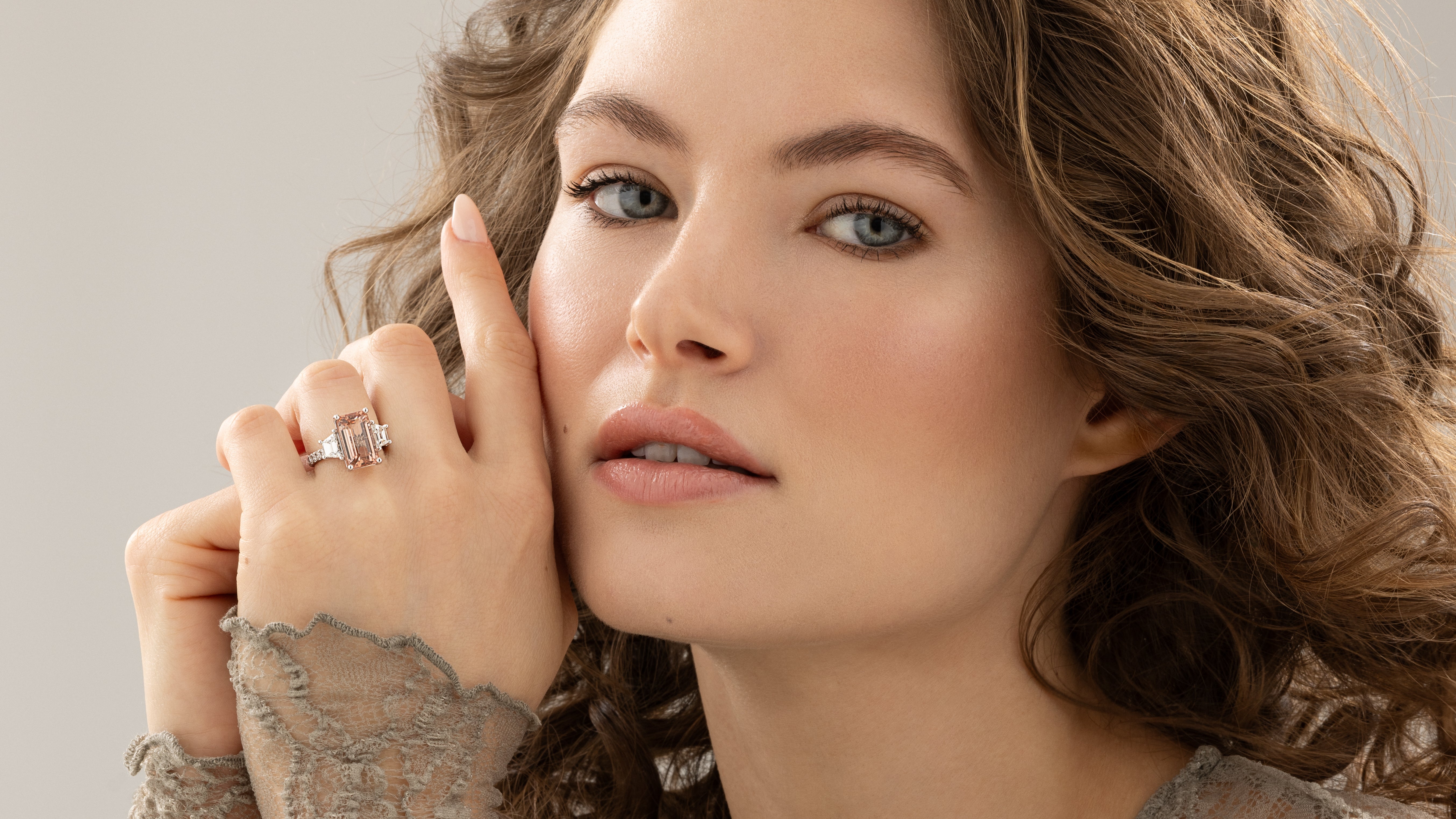

Emerald vs Pear Diamond: Which Engagement Ring Shape Suits You?
Choose an emerald cut diamond if you are drawn to straight lines and broad, mirror-like flashes. Choose a pear shaped diamond if you prefer a tapered outline and a livelier pattern of sparkle. Neither is the better engagement ring for everyone. The useful comparison is how the actual stones look in motion, how their settings feel on your hand, and which details you enjoy after the first impression. For a lab-grown diamond ring, start with those preferences, then compare the individual diamonds and their reports.

What changes when you choose emerald or pear?
An emerald cut is usually rectangular with cropped corners and rows of step facets. A typical pear combines a rounded end with a point and brilliant-style faceting. GIA’s diamond shape guide distinguishes the gleam of step cuts from the sparkle of brilliant cuts. That difference matters more than deciding which shape sounds more fashionable.
Try describing the effect you want without naming a shape. Perhaps you like a clean silhouette, or you want to notice little flashes as you move your hand. Bring those words to your appointment. They give the jeweller something more useful to work with than a photograph saved for its overall mood.
Emerald vs pear: what should you compare?
Use this as a shortlist guide, not a scorecard. A shape preference is personal; the quality and practicality of a finished ring still need their own assessment.
| Consideration | Emerald cut | Pear shape |
|---|---|---|
| Outline | Straight sides and cropped corners | Rounded end tapering to a point |
| Visual character | Broad reflections and an open appearance | Brilliant-style sparkle and a directional shape |
| First inspection | Look closely through the centre | Compare the outline and central dark pattern |
| Setting conversation | Ask how corners and height are handled | Ask how the point is protected |
| Final decision | Compare individual stones in motion | Compare individual stones in motion |
What should you check in an emerald cut?
GIA’s emerald cut guide explains that its long facets can make inclusions more noticeable and its colour more apparent. Look at the actual stone rather than choosing a clarity grade in isolation. Ask the jeweller to identify anything visible through the centre and explain whether it affects appearance or durability.
View it at a comfortable reading distance before using magnification. Then turn it slowly and notice how the reflections change. If something catches your attention, ask to compare another emerald cut beside it. Your reaction to an individual diamond is more useful than assuming every example of the shape will look the same.
Also separate the centre stone from the setting in your judgement. Decorative shoulders can add detail around a restrained centre, while a simpler band may emphasise its outline. Decide which part of the ring you want to lead.

What should you check in a pear shaped diamond?
Look for a balanced outline, then observe the dark pattern that can cross the centre. GIA’s pear shaped diamond guide recommends examining the bow-tie effect from different angles and in different lighting. Some contrast is normal; decide whether the pattern distracts you from the stone.
Ask to compare a fuller pear with a slimmer one. Keep the setting as similar as practical so you can concentrate on the outline. A narrow silhouette is not automatically more elegant, and a wider one is not automatically less refined. Note which proportions you return to without prompting.
GIA also identifies the point as the vulnerable area and describes a V-prong or bezel as protective options. Ask how the specific ring handles that detail. A beautiful overhead photograph is only one view of a setting you will wear.

Bring your two favourite shapes and compare the details that matter to you.
Which shape will look larger on your hand?
Do not settle this question from carat weight alone. GIA’s engagement ring buying guide distinguishes weight from visible size and recommends considering dimensions. Ask for the actual length and width of each candidate, then compare the rings on your own hand. An outline that feels substantial in a close-up can feel different at arm’s length.
Keep a simple note for each ring: the measurements, the setting style, and what you liked about its appearance. If one ring has a halo and the other does not, recognise that you are comparing complete designs as well as centre stones. Both comparisons are useful, provided you know which question you are answering.
For more background, read GIA’s engagement ring buying guidance.
How should you compare them at an appointment?
Begin with one example of each shape in a similar metal colour. Look at both from above and from the side, then relax your hand rather than holding a perfect pose. Ask to see them in more than one lighting environment. Keep any photographs at a comparable distance so the camera does not make the decision for you.
Next, describe your routine. Mention gloves, work with your hands, and whether you plan to wear a wedding band beside the ring. Ask the jeweller to explain the height, contact points, care and inspection needs of each setting. Confirm what is possible for the exact design before assuming a change can be made later.
Finally, return to your first preference. If one ring keeps attracting your attention, explain why. A clear preference for its outline or movement is a stronger starting point than choosing the ring you think someone else would rank highest.

Emerald and pear engagement ring FAQ
Is an emerald cut diamond a green gemstone?
No. Here, emerald cut describes the diamond’s cutting style. It does not mean the centre stone is an emerald gemstone.
Does a pear diamond always have a bow-tie?
Many pears show this dark pattern, but its appearance varies. Compare actual stones in motion rather than judging the whole shape from one photograph.
Which direction should a pear ring point?
Choose the direction you enjoy wearing. GIA describes several orientations; ask how the complete design feels in your preferred position.
Should I choose the highest clarity grade available?
Start by comparing the actual diamonds and reading their reports with the jeweller. Explain what you can see and what matters to you before deciding whether a different grade offers a meaningful improvement.
Find the shape that feels like you
Explore Labmond’s lab-grown diamond engagement rings, then bring your favourite emerald and pear designs to a conversation about the complete ring.
Shop Engagement Rings →