

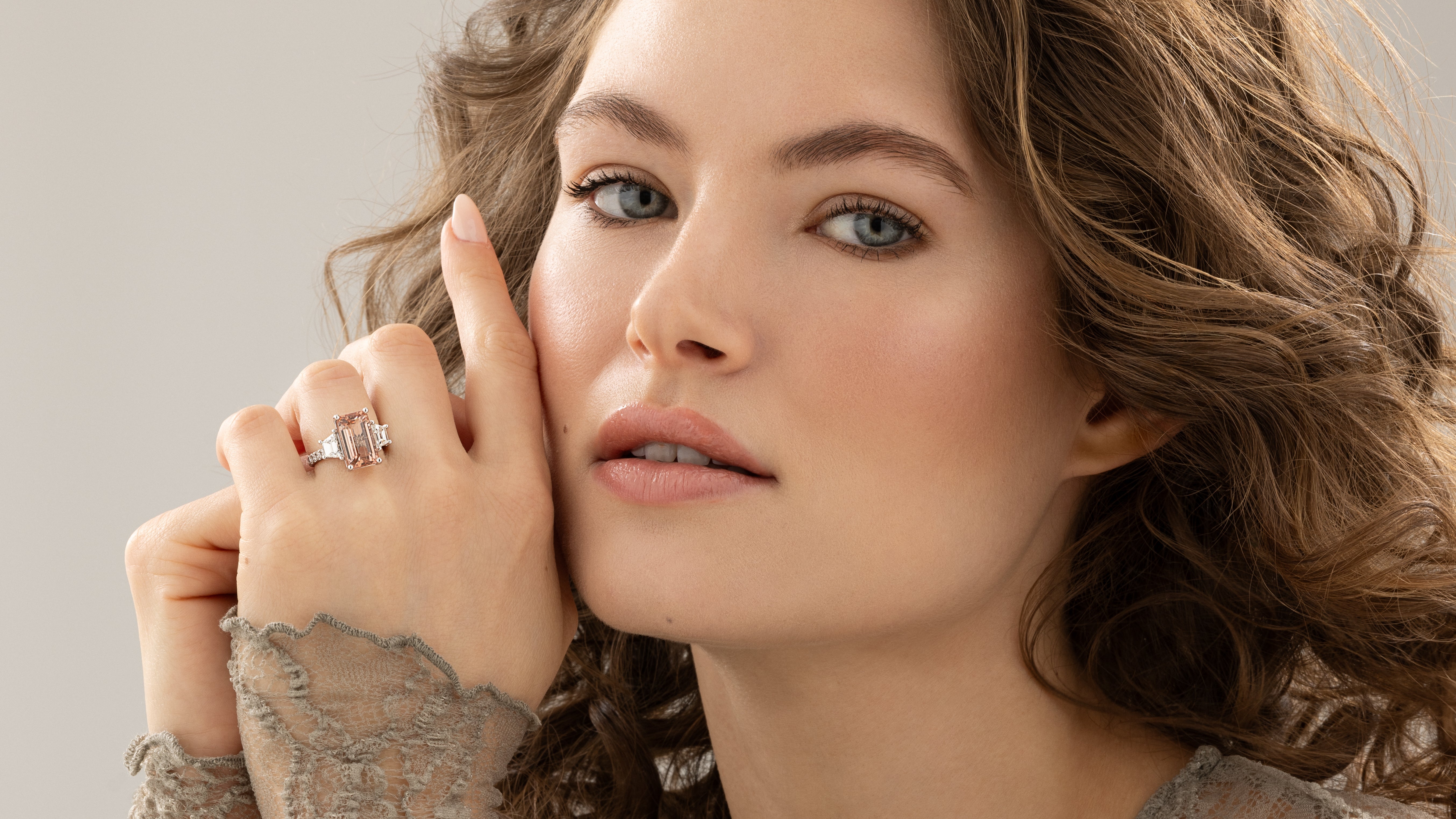

How to Find Your Partner's Ring Size Without Spoiling the Surprise
The best way to find your partner's ring size without spoiling the surprise is to start with a ring they already wear comfortably on the intended finger and have a jeweller measure it. If you cannot confirm which finger it fits, treat the result as a clue, not an order-ready size. A trusted person who knows a recent measurement can also help. When neither option is available, a quiet conversation about sizing is usually more useful than a clever guess. You can share the practical details and still keep the proposal itself a surprise.

Can you use a ring your partner already owns?
Choose a ring you have actually seen your partner wear, rather than one that has been sitting in a jewellery box. Note the hand and finger, and whether they describe the fit as comfortable. A ring worn on another finger gives you incomplete information, even if it looks close.
Bring the ring to the appointment if borrowing it is practical. Tell the jeweller what you know and what you are assuming. Avoid turning “they sometimes wear this” into “this is definitely their size”. Keeping those two statements separate is the most useful part of the exercise.
For a home estimate, measure across the inside opening rather than the outer metal. GIA’s sizing guidance notes that the inside must be round for this measurement method to work. An oval or distorted band needs professional assessment.

Which sizing clues are worth taking to a jeweller?
This comparison is a planning aid, not an accuracy score. The strongest clue is one whose origin you can explain. If two clues disagree, take both to the jeweller rather than averaging them.
| What you have | How to use it | What remains uncertain |
|---|---|---|
| A comfortable ring from the intended finger | Have the ring measured | How the chosen engagement ring will feel |
| A recent professional size | Record the size and sizing system | Whether it applies to this finger and design |
| A friend's recollection | Ask where the number came from | Date, finger and reliability of the memory |
| A photograph or an approximate tracing | Bring it as context | Scale, shape and exact fit |
| No reliable clue | Discuss a fitting or proposal plan | The final size still needs confirmation |
What if they do not wear rings?
Start with the information your partner has already shared about jewellery. They may have saved a size after trying rings on, or mentioned a fitting to someone close to them. Ask a trusted person whether they know a measurement, without asking them to manufacture an answer.
If there is no reliable starting point, consider separating the proposal from the final ring choice. You might discuss sizes now and keep the setting, timing and location private. Or agree to choose the final ring together after the proposal. Ask the jeweller what arrangements are actually available before building a plan around them.
There is no need to make the ring size a test of how well you know your partner. A short practical conversation can be thoughtful, and it leaves the more personal choices entirely yours.

Talk through your proposal plans and the sizing information you already have.
Should you measure with string or a paper strip?
Do not rely on these methods for the final order. GIA cautions that string can stretch and paper can change shape. Measuring only the base of the finger can also overlook the knuckle the ring must pass over. A jeweller’s fitting is a better way to assess both.
For the same reason, an impressive-looking number from a homemade measurement should not outweigh uncertainty about the method. Write down how you obtained the estimate, and let the jeweller decide whether it is useful. Do not add a guessed adjustment to compensate for another guess.
What should you ask about resizing?
Ask about the exact design you are considering, including any diamonds along the band. Request a clear explanation of whether it can be resized, what changes are possible, and whether an exchange or remake would be needed instead. Do not assume every ring has the same options.
Confirm the applicable cost, timing and conditions before ordering. Ask when any return or adjustment window begins, especially if you plan to buy well ahead of the proposal. If engraving is part of your plan, ask whether it should wait until the fit is confirmed.
Keep the answer with your order details. This is not the moment to rely on a general promise remembered from another shop or a different ring. A beautiful pavé band and a plain solitaire both deserve questions specific to their construction.

What happens after the proposal?
Arrange a fit check with your partner rather than treating the first try-on as the final verdict. Ask them to describe how the ring feels when putting it on, taking it off and moving their hand. Share those observations with the jeweller instead of diagnosing the fit from a photograph.
Mention any plan to wear a wedding band beside it. You do not need to choose that band now, but it is useful context for the fitting conversation. GIA’s engagement ring buying guidance recommends considering whether the engagement ring accommodates a wedding band.
Keep the focus on comfort and enjoyment. If the fit needs attention, that is a practical follow-up to a meaningful occasion, not a flaw in the proposal.

What should you bring to a Labmond appointment?
Bring the reference ring if available, your notes about where it is worn, and any recorded size with its source. Add the proposal date, your preferred diamond shapes, metal colour and a few setting examples. Be clear about which details are confirmed and which are open to discussion.
If you are starting with a virtual appointment, explain that you need help planning the sizing process. Photos can communicate style and provide context, but they should not be presented as a professional measurement. Ask what the next step should be before placing the final order.

Surprise ring sizing FAQ
Can I use a ring from the other hand?
Bring it as a reference, but say which hand it fits. Do not assume its size is correct for the intended finger.
Should I order a larger size just in case?
Avoid choosing a larger size without advice. Explain your evidence and uncertainty to the jeweller, then agree on a plan for the specific ring.
Can a friend find out the size for me?
Yes, if they know a reliable measurement or can help arrange a fitting. Ask them to distinguish a confirmed size from a recollection.
Will asking about ring size ruin the surprise?
It does not have to. You can discuss sizing and preferences while keeping the proposal date, setting and personal details private.
Choose with confidence
Explore Labmond’s lab-grown diamond engagement rings, then talk with us about the details that will make your choice feel personal.
Shop Engagement Rings →