

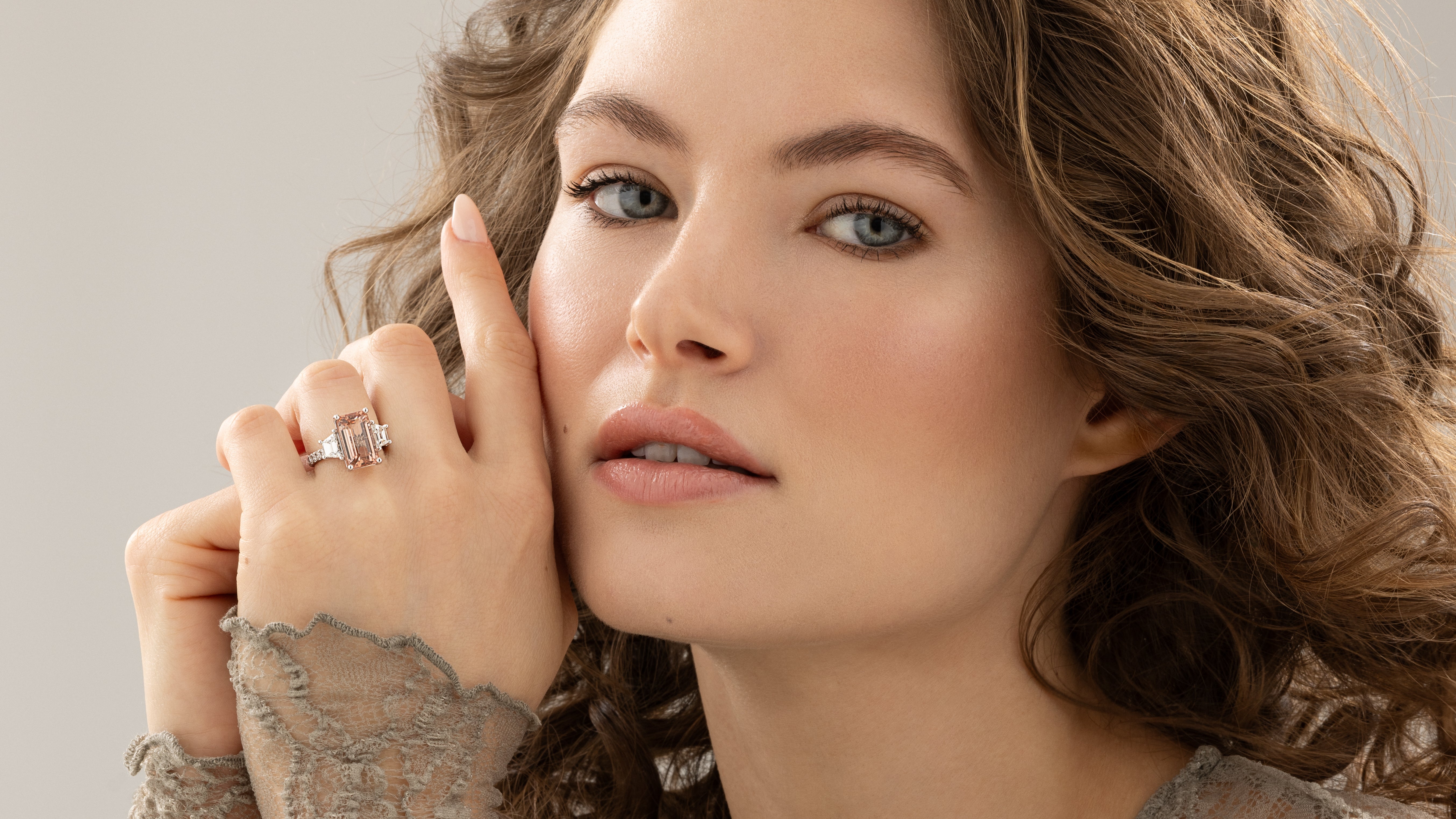

How Much Does a Lab-Grown Diamond Engagement Ring Cost in 2026?
Most couples spend between $2,000 and $5,000 on a lab-grown diamond engagement ring in 2026. According to The Knot's latest study, reported by Rapaport, the average lab-grown ring now costs $4,300, carries a two carat centre stone, and comes in $2,700 below the $7,000 average for a natural diamond ring.
In other words, the question is no longer whether a beautiful ring fits your budget. It is how far your budget can go. Here is exactly what lab-grown diamond rings cost this year, what moves the price up or down, and where smart shoppers quietly save thousands.
See the 2026 price table →
How much does a lab-grown diamond engagement ring cost in 2026?
Prices scale with carat weight faster than most first-time buyers expect, because larger rough diamonds take longer to grow and cut. The ranges below reflect typical 2026 retail pricing for a finished lab-grown diamond ring, compiled from current market price guides. Where a ring lands within its range depends on the cut quality, colour, and clarity of the stone and on the setting you pair it with.
| Centre stone | Typical ring price (2026) | Good to know |
|---|---|---|
| 1 carat | $900 to $1,800 | The classic starting point, widely available in every shape |
| 2 carats | $2,000 to $4,500 | The 2026 sweet spot: the average lab-grown centre stone is now 2 carats |
| 3 carats | $4,500 to $9,000 | Statement territory that would cost several times more in a natural stone |
For context, couples who chose natural diamonds in the same study spent $7,000 on average for a 1.6 carat stone. Lab-grown buyers spent $4,300 and walked away with 2 carats. That gap is the whole story of why 61 percent of engagement rings sold today carry a lab-grown centre stone.
What actually drives the price of a lab-grown ring?
Four things: the carat weight, the quality grades of the stone, its shape, and the setting. Carat weight matters most, but shape is the lever people overlook. Round brilliants command the highest price per carat because they waste the most rough in cutting. Elongated shapes such as ovals typically cost less per carat and cover more of the finger, which is why an oval solitaire is the value play of 2026: a simple band puts the entire budget into the stone itself.
Grades work the same way at every jeweller: colour in the near-colourless range and clarity of VS1 or VS2 look identical to perfection on the hand, at a fraction of the flawless price.
Explore oval cut rings →
How much should you spend on an engagement ring?
Forget the old three months of salary rule. Even The Knot now calls it outdated, and the data agrees: average overall spending fell to $4,600 in 2025 as couples put the difference toward homes, weddings, and honeymoons. The right budget is the one you can pay without debt and without regret.
What has changed is what that budget buys. At $3,000, a lab-grown shopper is choosing between a beautifully cut two carat oval or a one and a half carat round with room left for a pavé band. A decade ago the same money bought a stone half that size. Set the number first, then let the ring compete for it.
Explore engagement rings →
Which settings make your budget go further?
A halo is the classic multiplier. A ring of small pavé diamonds around the centre stone adds visual size for far less than the next carat step up, and a double halo pushes the effect further still. A hidden halo tucks that sparkle under the stone instead, adding fire from the side without changing the look from above. If you are still deciding between the three main designs, our guide to halo, solitaire and three stone settings compares them side by side.
Metal colour, on the other hand, is close to a free choice. Yellow, rose, and white gold of the same weight cost about the same, so picking the warm tones that dominate 2026 style adds character without adding cost.
Explore halo rings →
What are the smartest ways to save without downgrading?
Buy just shy of the milestone. A 1.9 carat stone looks identical to a 2 carat on the hand and skips the price jump that whole numbers carry. Prioritize cut over the grades nobody can see, because a brilliantly cut VS2 outshines a sluggish flawless stone every time.
Then think in spread rather than weight. A three-stone design uses two smaller side stones to build width across the finger for less than one larger centre would cost, and elongated cuts such as the emerald or pear deliver more face-up size per carat than any round.
Explore three-stone rings →
What other costs should you plan for?
The ring is not quite the whole bill. A wedding band typically adds several hundred dollars to a few thousand depending on metal and diamonds, and it is worth choosing one that sits flush against your engagement ring rather than retrofitting later. Insurance runs roughly 1 to 2 percent of the ring's value per year, a small price for wearing it without worry.
Finally, make sure any stone you buy comes with an independent grading report from a lab such as IGI, so the grades you are paying for are verified rather than promised.
Explore wedding rings →
Frequently asked questions
Is $3,000 a good budget for a lab-grown engagement ring?
Yes, comfortably. In 2026, $3,000 buys a well-cut lab-grown diamond of roughly 1.5 to 2 carats in a quality gold setting, which is above the size the average natural diamond buyer receives at more than twice the price.
How much is a 2 carat lab-grown diamond ring?
Typically $2,000 to $4,500 in 2026, depending on cut quality, colour, clarity, and the setting. Two carats is now the average lab-grown centre stone size, so selection at this weight has never been better.
Why are lab-grown diamonds so much cheaper than natural ones?
Because the supply chain is shorter, not because the product is lesser. A lab-grown diamond is chemically and optically identical to a mined one, but it skips exploration, mining, and layers of middlemen, so the same quality reaches you for less.
Do lab-grown diamonds hold their value?
Treat any engagement ring, mined or grown, as a purchase for love rather than an investment, since retail markups mean neither reliably resells at its purchase price. Lab-grown buyers simply risk far less capital for the same beauty on the hand.
Are lab-grown diamond prices still falling in 2026?
Prices declined sharply through the early 2020s but the curve has flattened, especially for high quality cuts where demand keeps growing. Waiting a year is unlikely to change what you pay as much as choosing the right shape and grades today will.
See what your budget really buys
Lab-grown diamond engagement rings with transparent pricing, from classic solitaires to halos and three-stone designs.
Shop Engagement Rings →